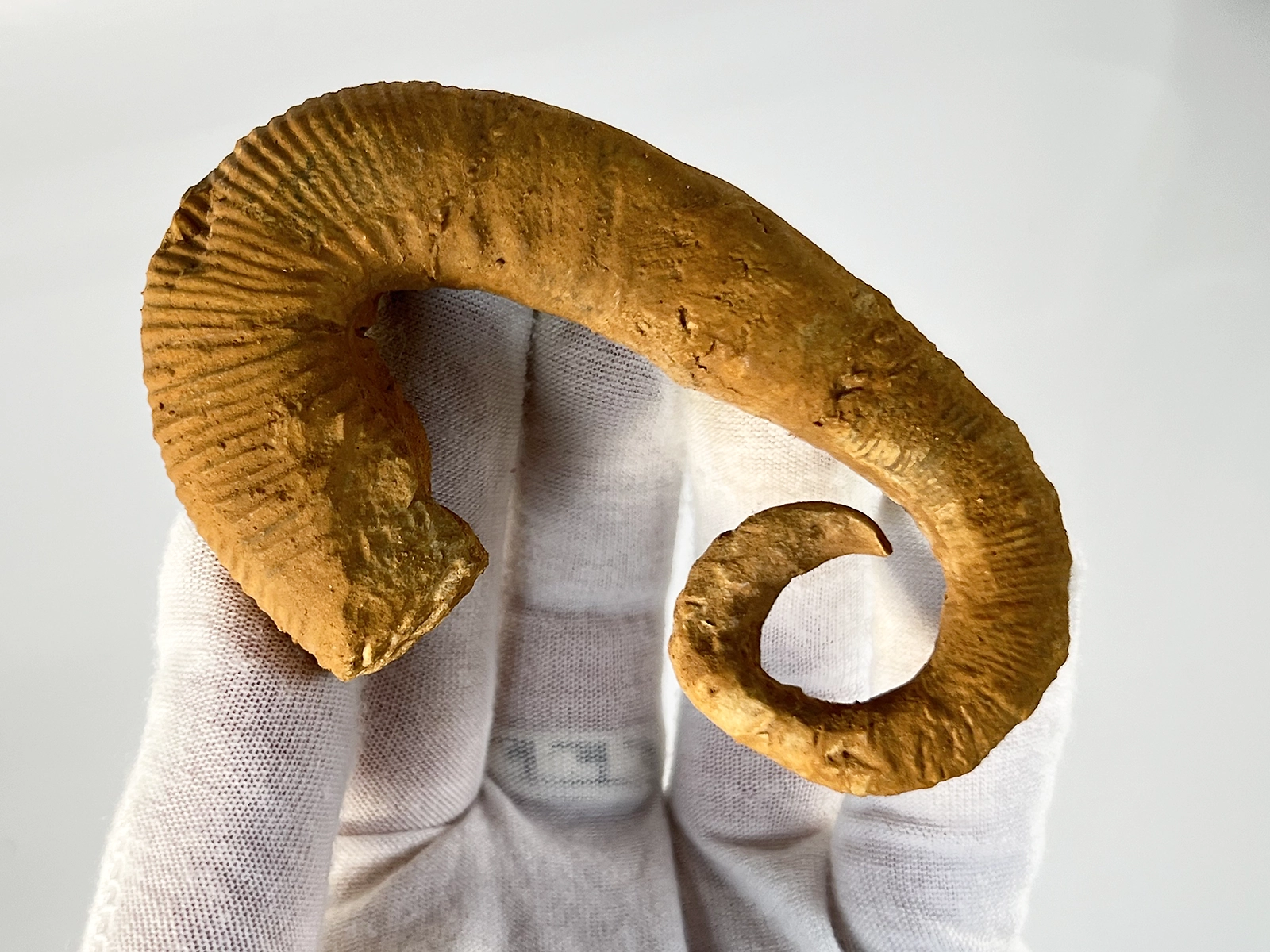
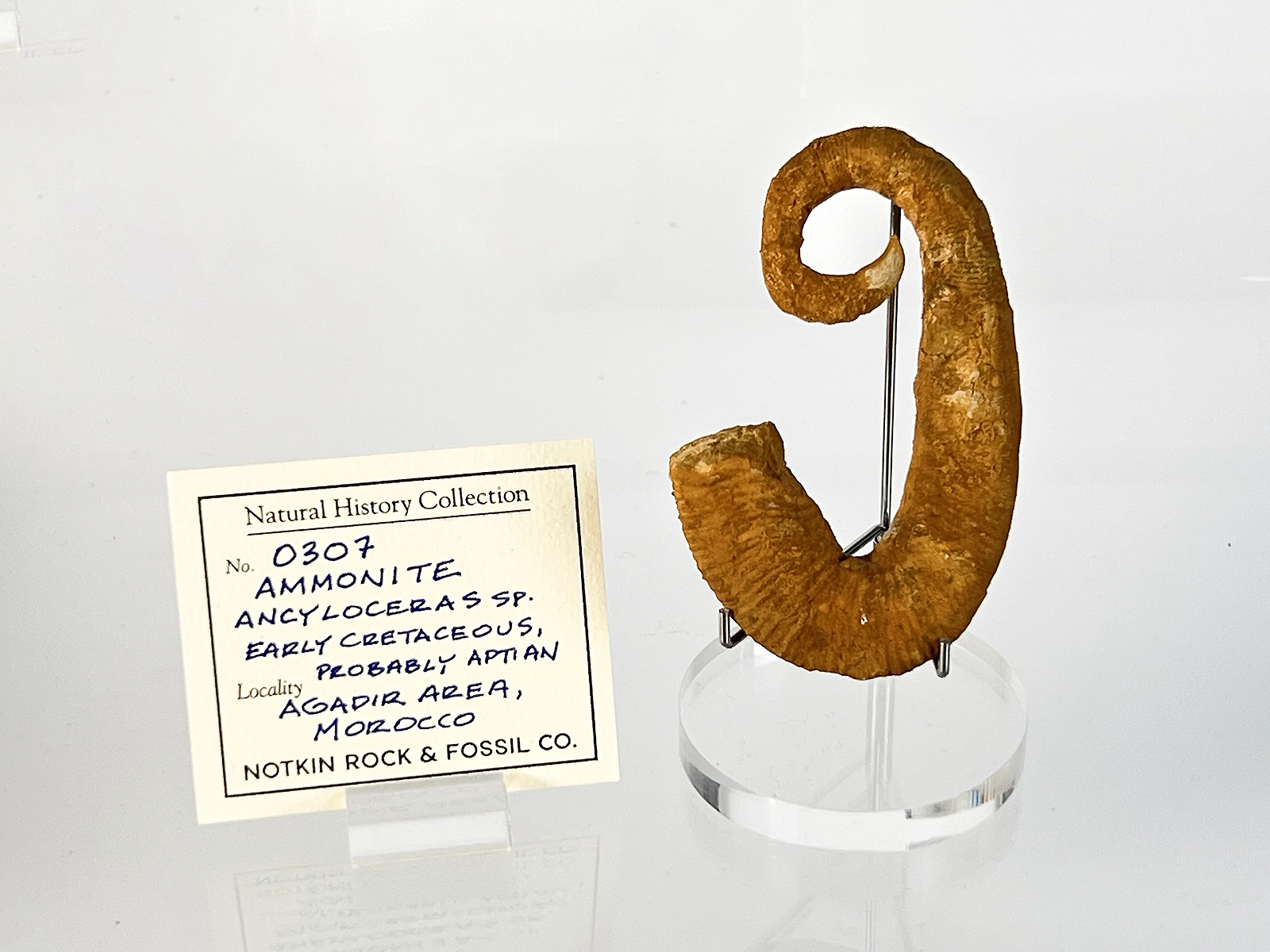
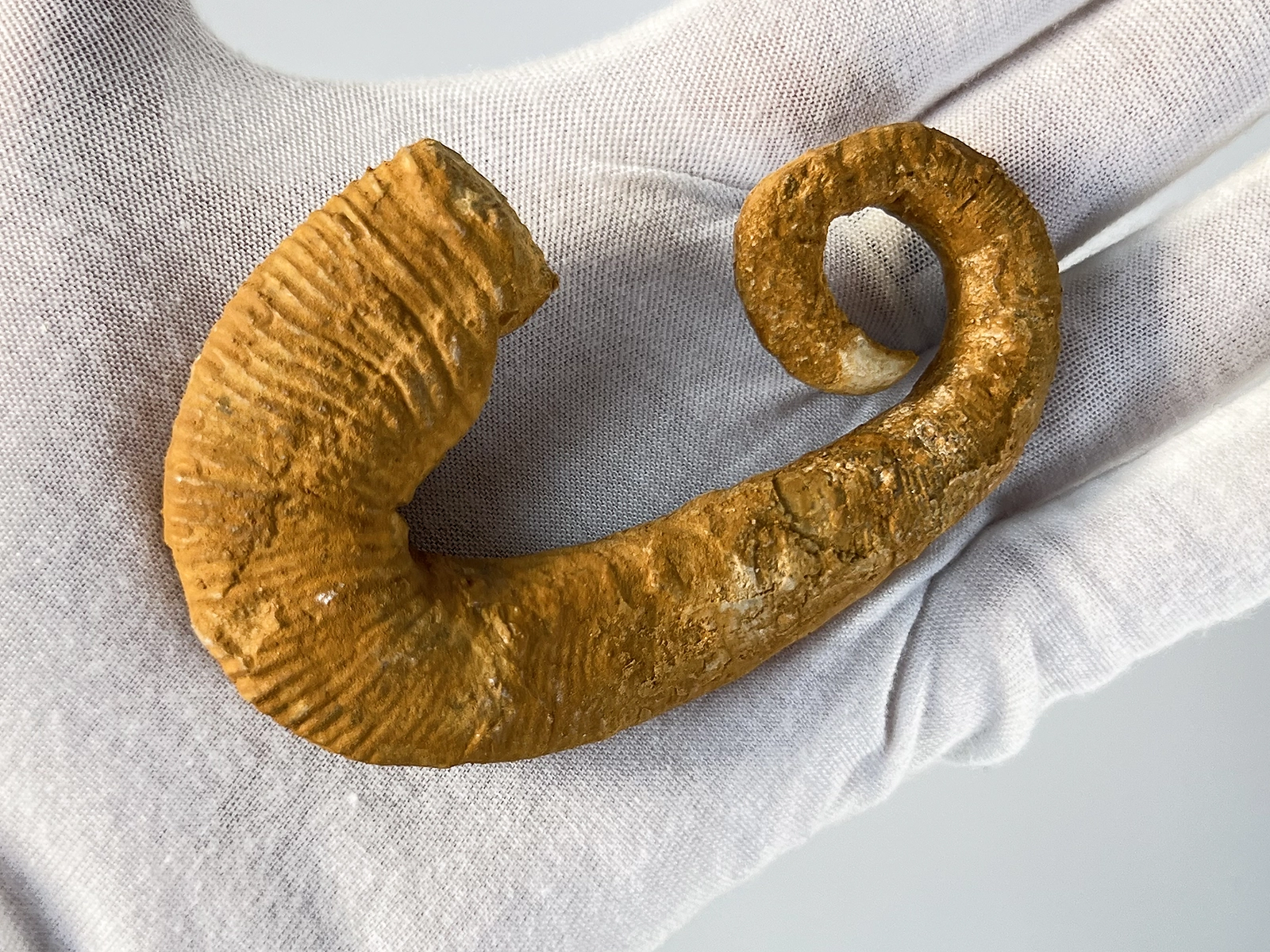
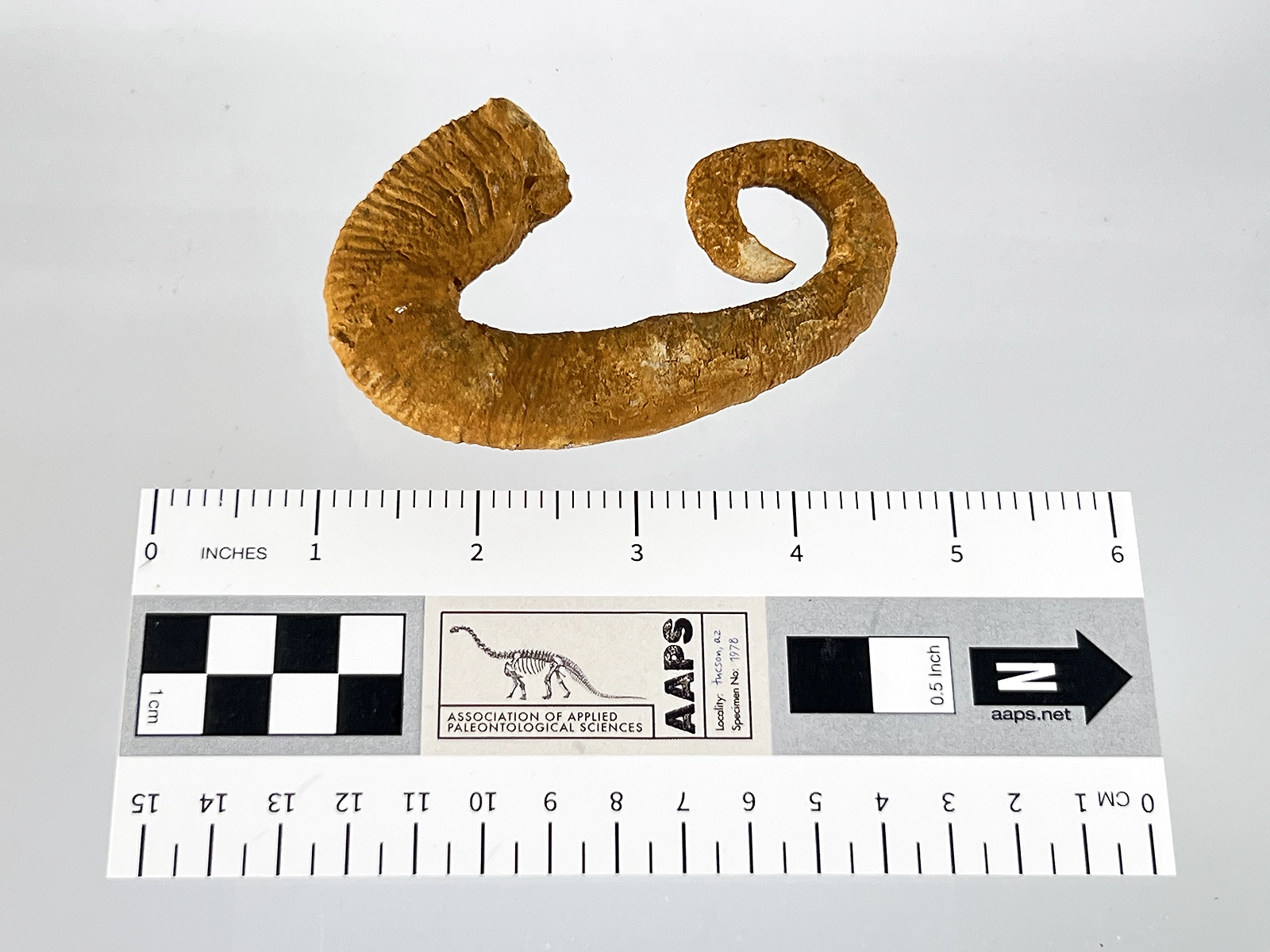
Ancyloceras sp. displays one of the most distinctive shell forms produced by any of the ammonites. Rather than maintaining the tightly coiled, symmetrical spiral familiar from more typical ammonites, the shell opens outward into an elongated shaft before curling back upon itself in a pronounced hook. Its unusual silhouette gives the fossil an almost sculptural quality and makes the changing pattern of growth particularly easy to appreciate.
Strong ribbing is preserved across much of the shell, becoming especially prominent around the broad curved portion at one end. The long central section is more subdued, while the smaller terminal hook remains remarkably expressive despite its compact size. Warm ochre and brown coloration emphasizes the relief of the fossil and gives the specimen a handsome, naturally weathered appearance.
Ancyloceras belongs to the heteromorph ammonites—ammonites whose shells departed from the conventional close, flat spiral. The term literally refers to their “different form.” Heteromorph shells could become loosely coiled, straightened, hooked or even helically wound, producing some of the most extraordinary shell geometries known among cephalopods. Their unusual shapes also suggest that many were comparatively slow or specialized swimmers rather than the streamlined animals often imagined for more conventionally coiled ammonites.
There is a nice piece of historical interest in the name as well. Ancyloceras was established by the celebrated French naturalist Alcide d’Orbigny in 1842, and the name derives from Greek roots referring to a bent or hooked horn—an unusually apt description of the shell. The genus eventually became so closely associated with these peculiar ammonites that it supplied the name for the family Ancyloceratidae and, more broadly, the ancyloceratid heteromorph lineage. This is one of those fossils where the shape itself tells the story: even to someone not familiar with ammonites, it is immediately apparent that something very unusual is going on here.