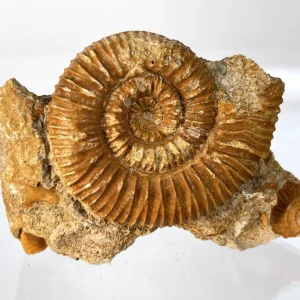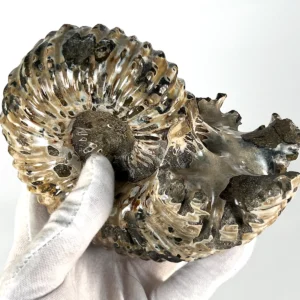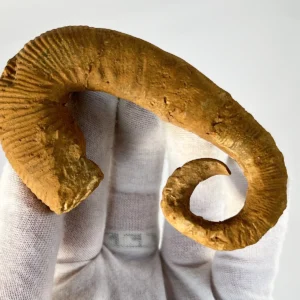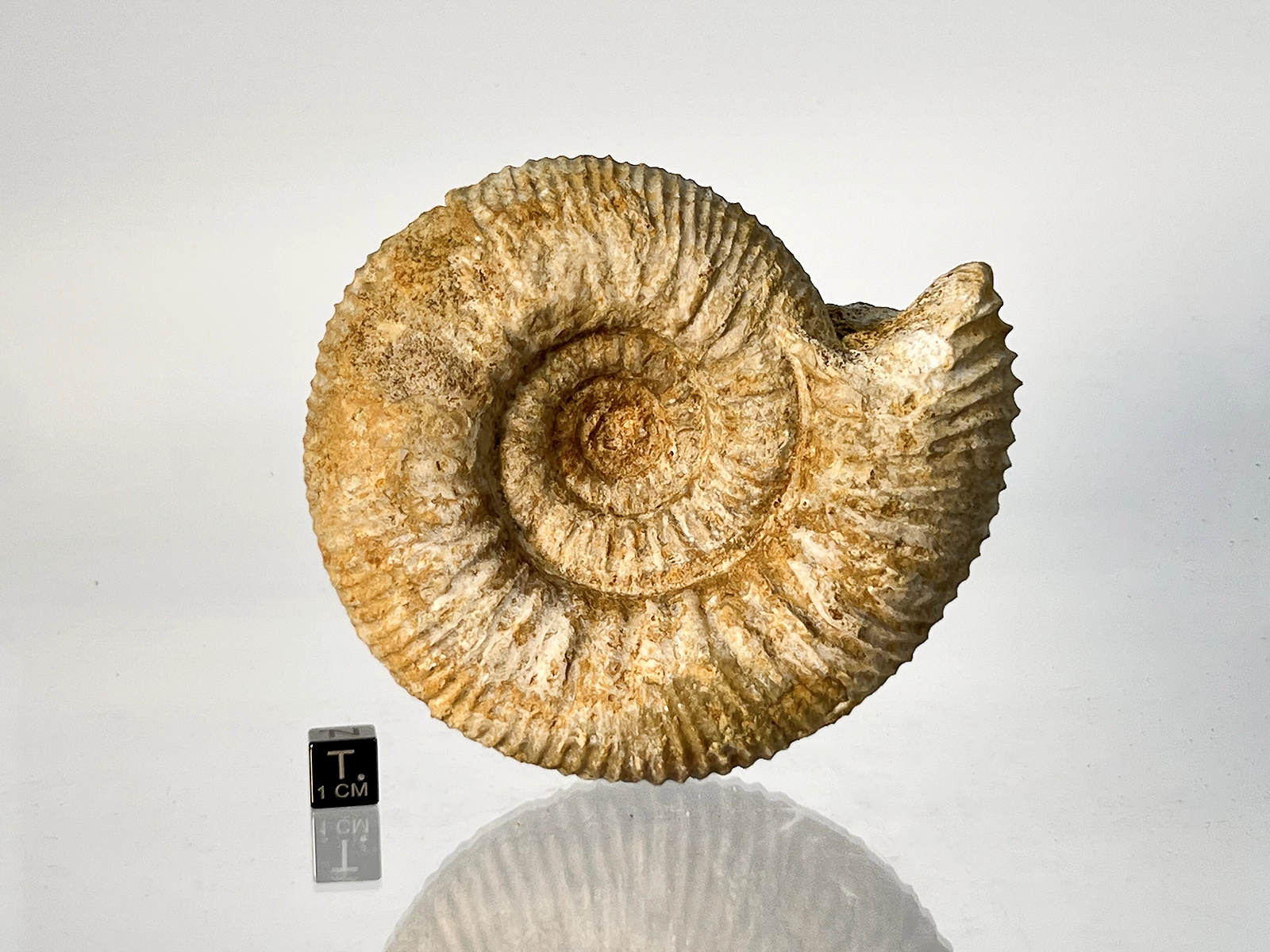
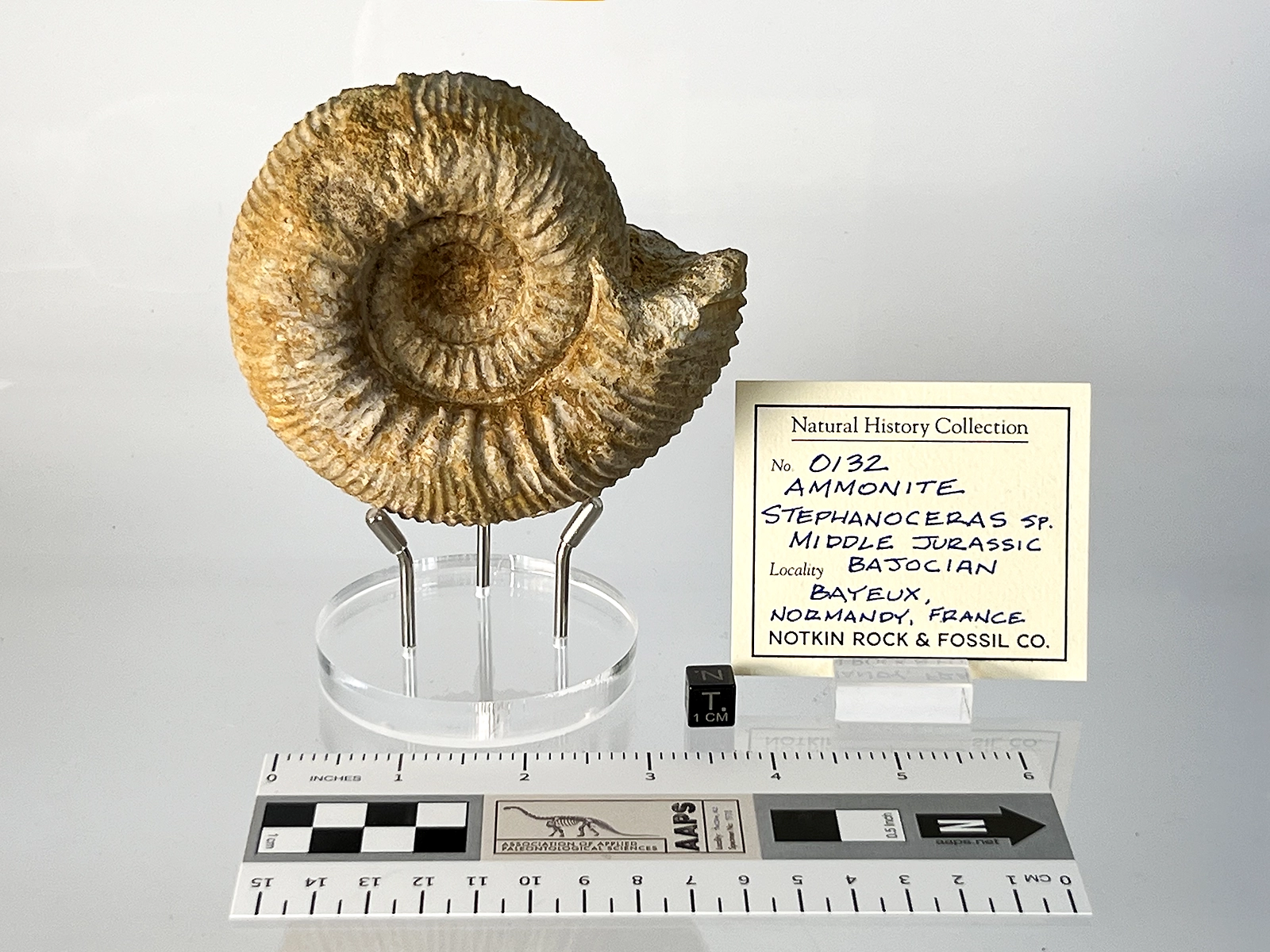
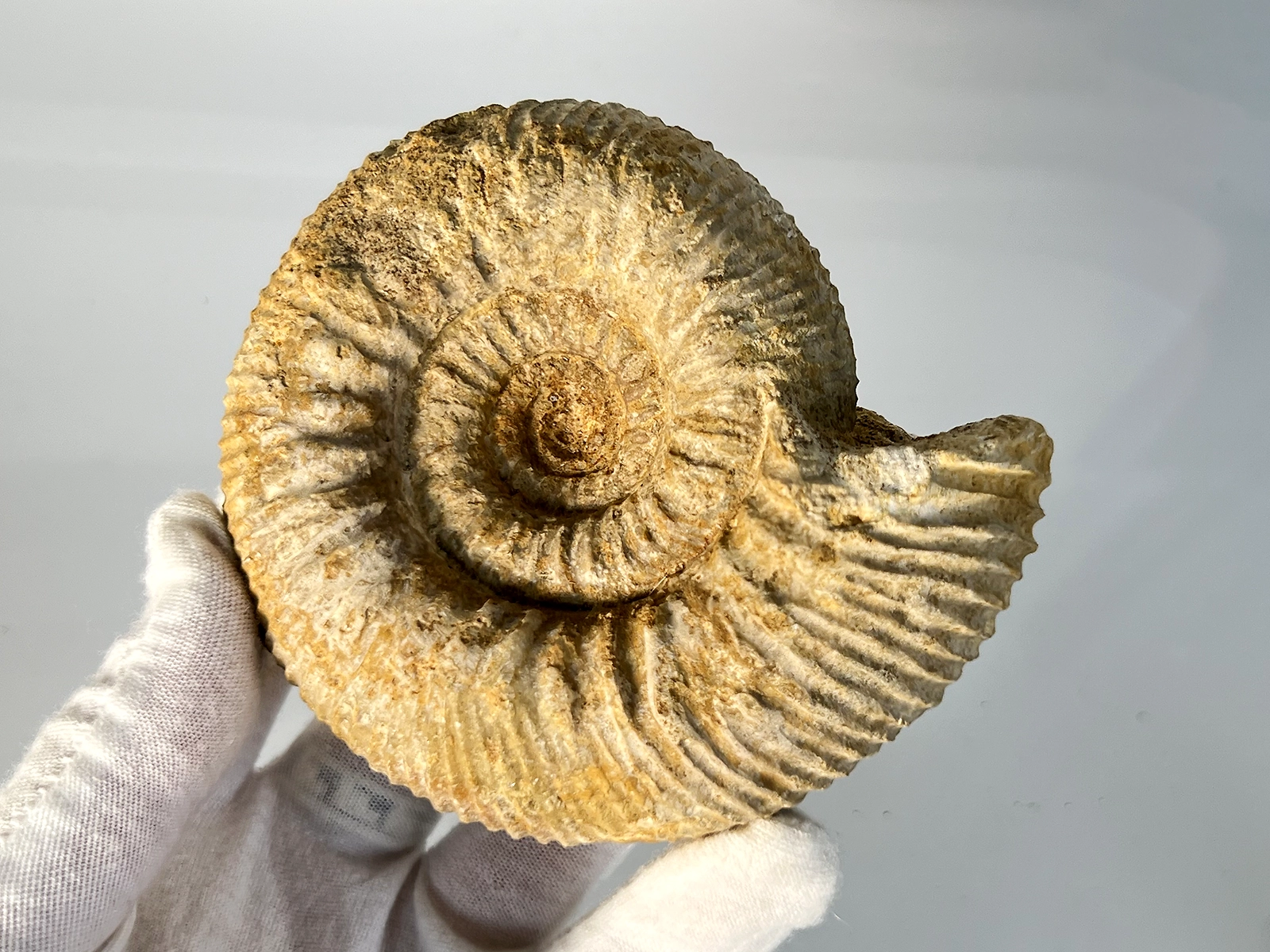
This exceptional example of one of my favorite fossils, Stephanoceras, presents the classic sculptural form of a Middle Jurassic ammonite, with a broad, open coil and strongly developed ribbing extending across the whorls. Preserved with substantial three-dimensional relief, the shell has a particularly architectural quality, allowing its spiral growth pattern to be appreciated at a glance.
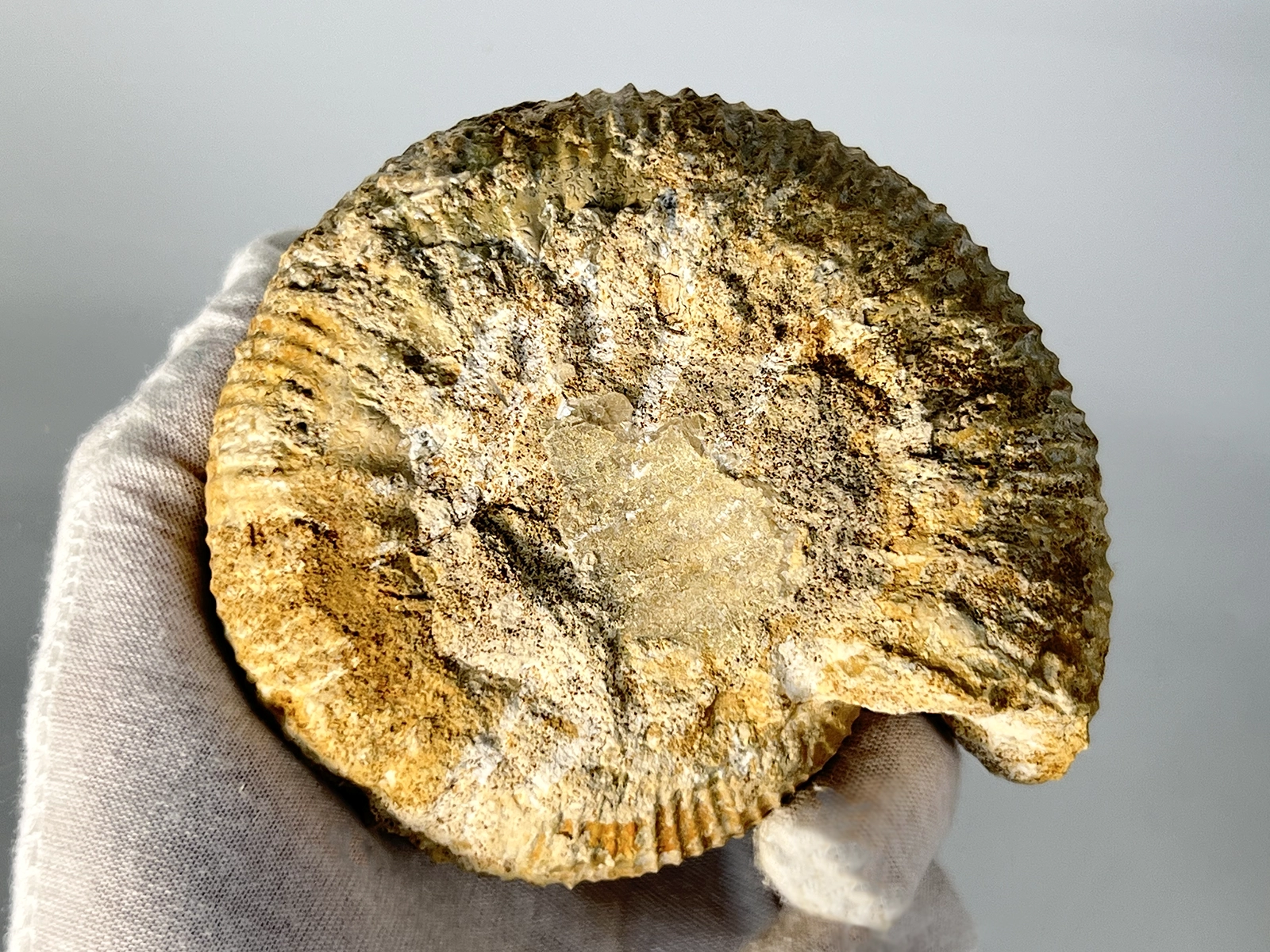
The inner whorls remain clearly visible, while the outer whorl carries pronounced, evenly spaced ribs that create a strong rhythm across the surface. Subtle variations in cream, tan, and warm ochre accentuate the relief and contribute to the specimen’s natural, understated appearance. Preserved largely free of matrix, this example has an especially clean presentation and displays well from multiple angles. The reverse, less appealing face, has only been partially prepared, but the display face is beautiful. As I’m fond of saying: “You can only display one face at a time.”
Particularly appealing is its provenance: this ammonite comes from the Bayeux region of France, for which the Bajocian Stage takes its name. This piece came directly from the finder, who reports that the original locality is no longer accessible to collectors, adding an additional note of historic interest to an already handsome and representative specimen.