
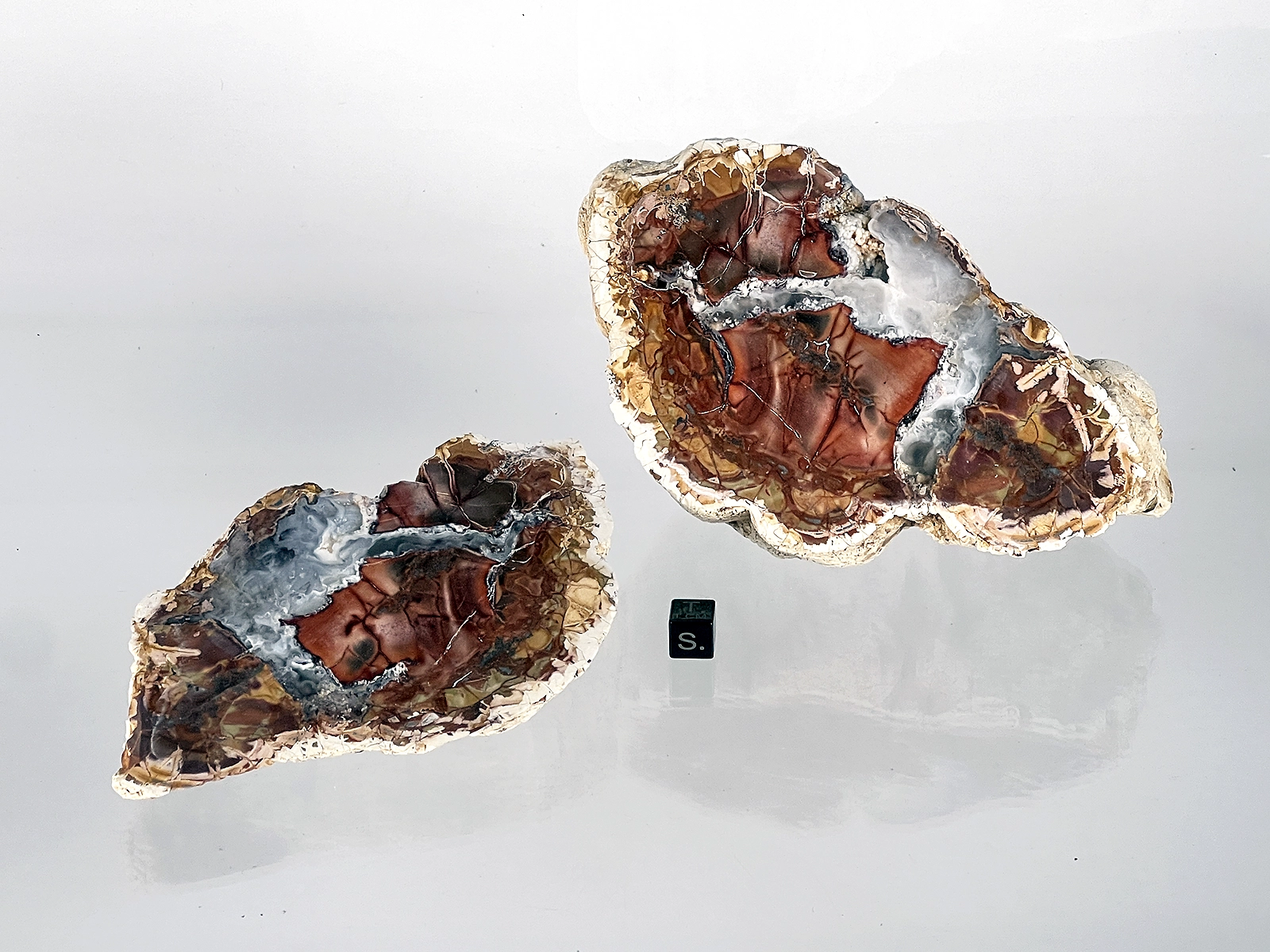
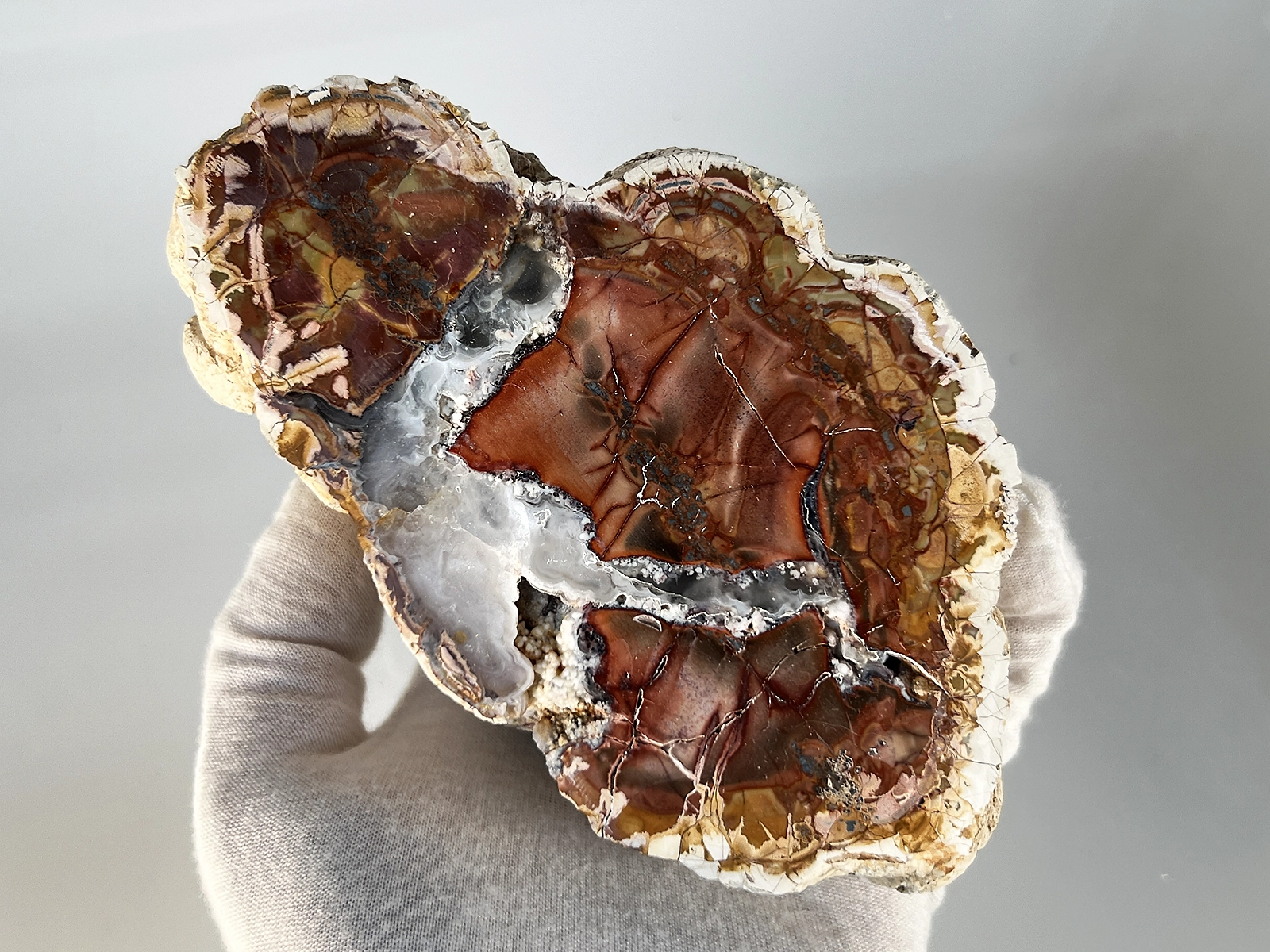
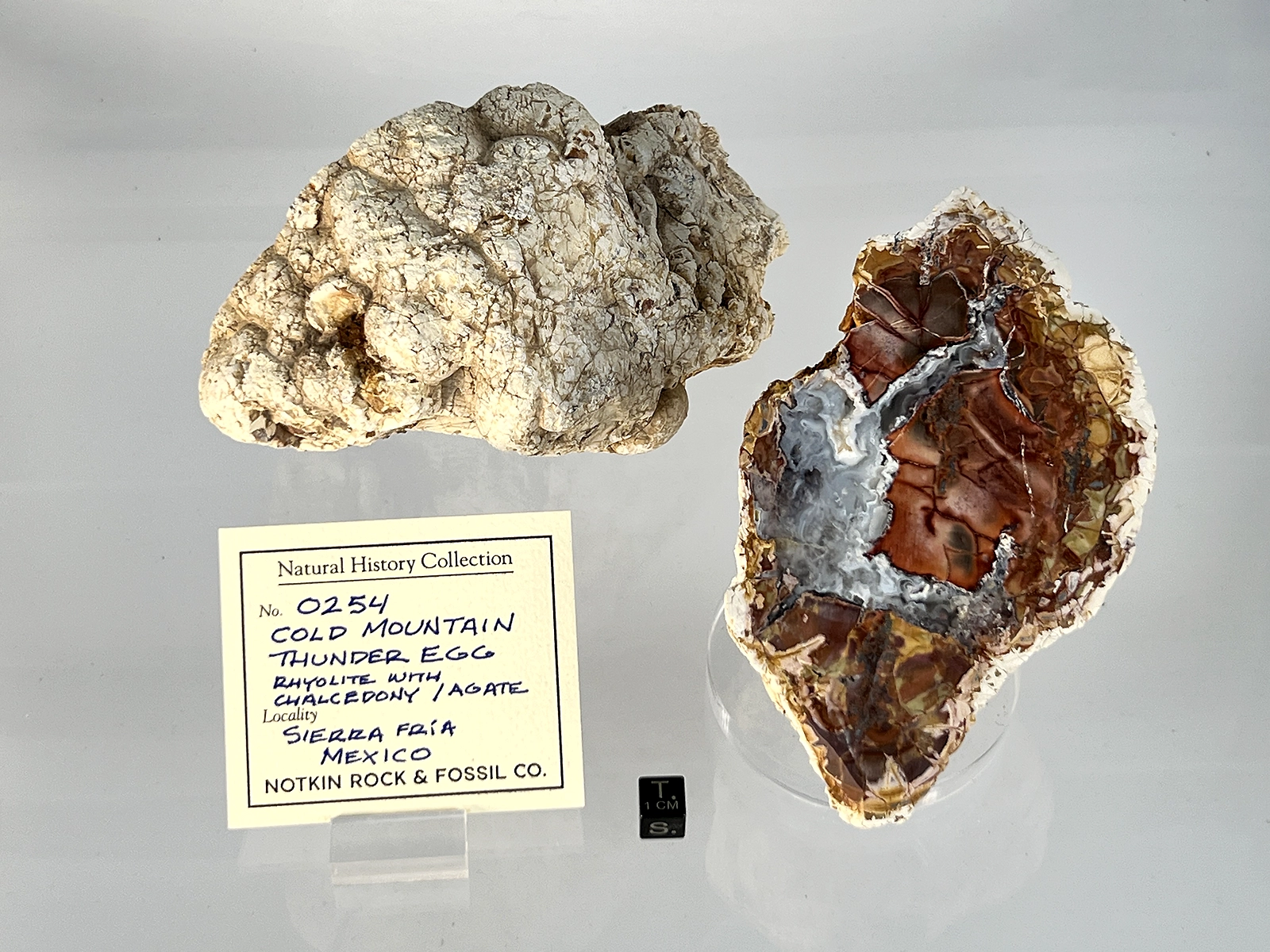
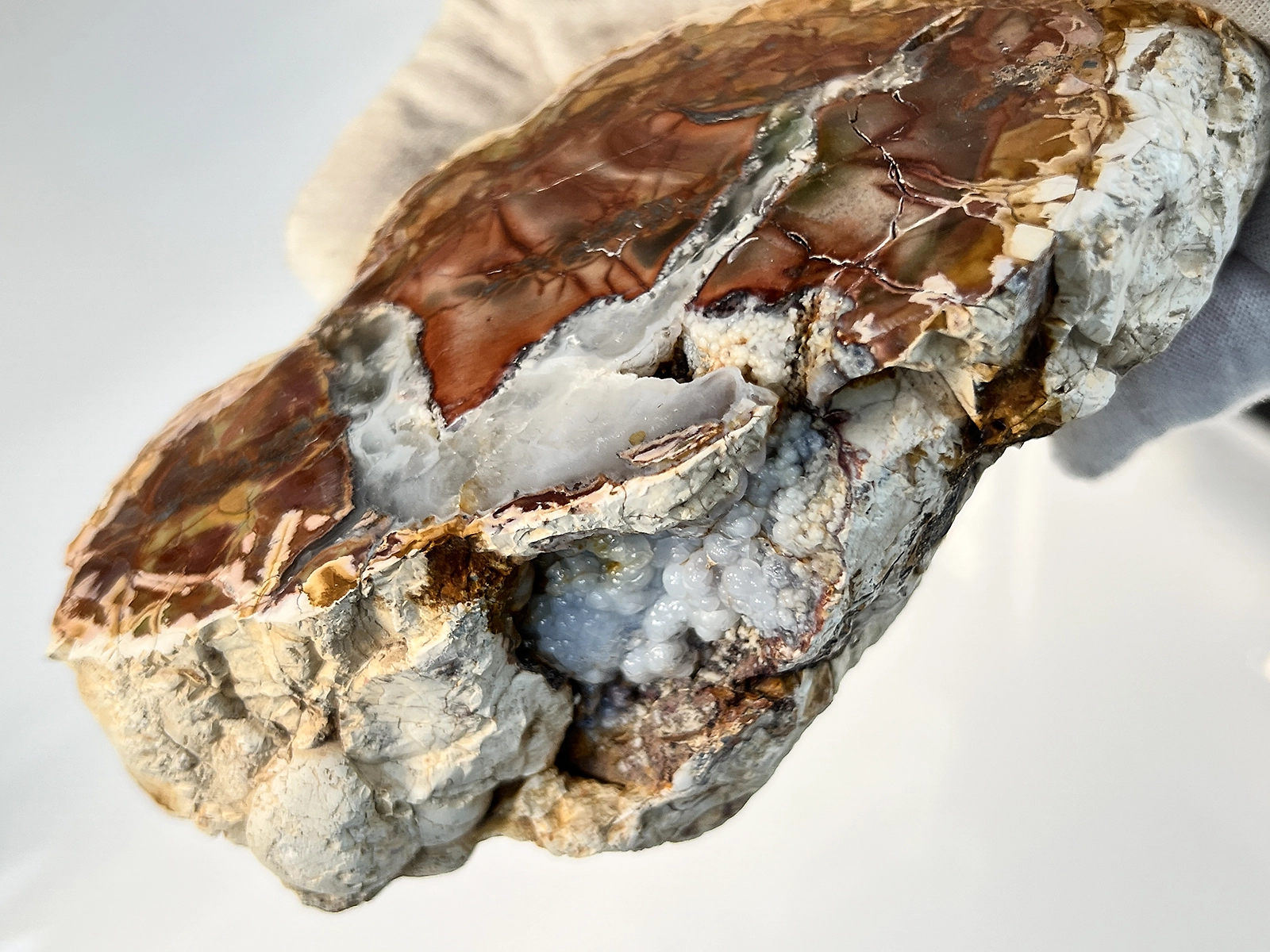
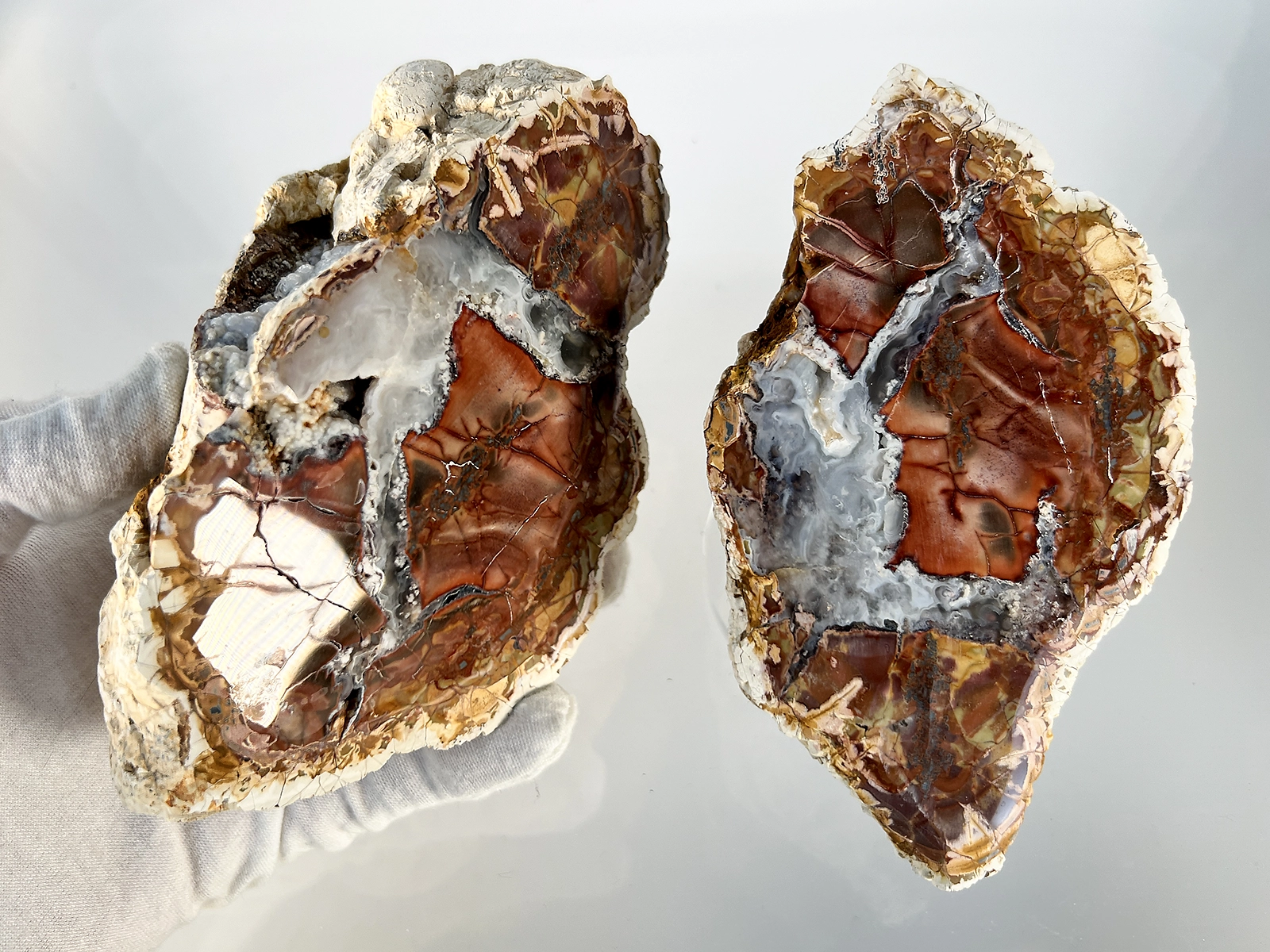
A striking matched pair of rare Cold Mountain thunder egg halves (often spelled “thunderegg”), polished to reveal a complex interior of deep rust-red and brown rhyolite crossed by contrasting blue-gray and white chalcedony-filled fractures. The silica veins branch irregularly through the stone, creating bold, almost river-like patterns against the warmer volcanic host rock.
Cold Mountain thunder eggs are somewhat unusual in appearance compared with the classic rounded agate-filled examples from familiar places such as Oregon. This Mexican material is noted for is strongly-colored rhyolite and narrow hydrothermal chalcedony or agate-filled cavities and fractures, often producing intricate brecciated or “fractal” patterns when cut.
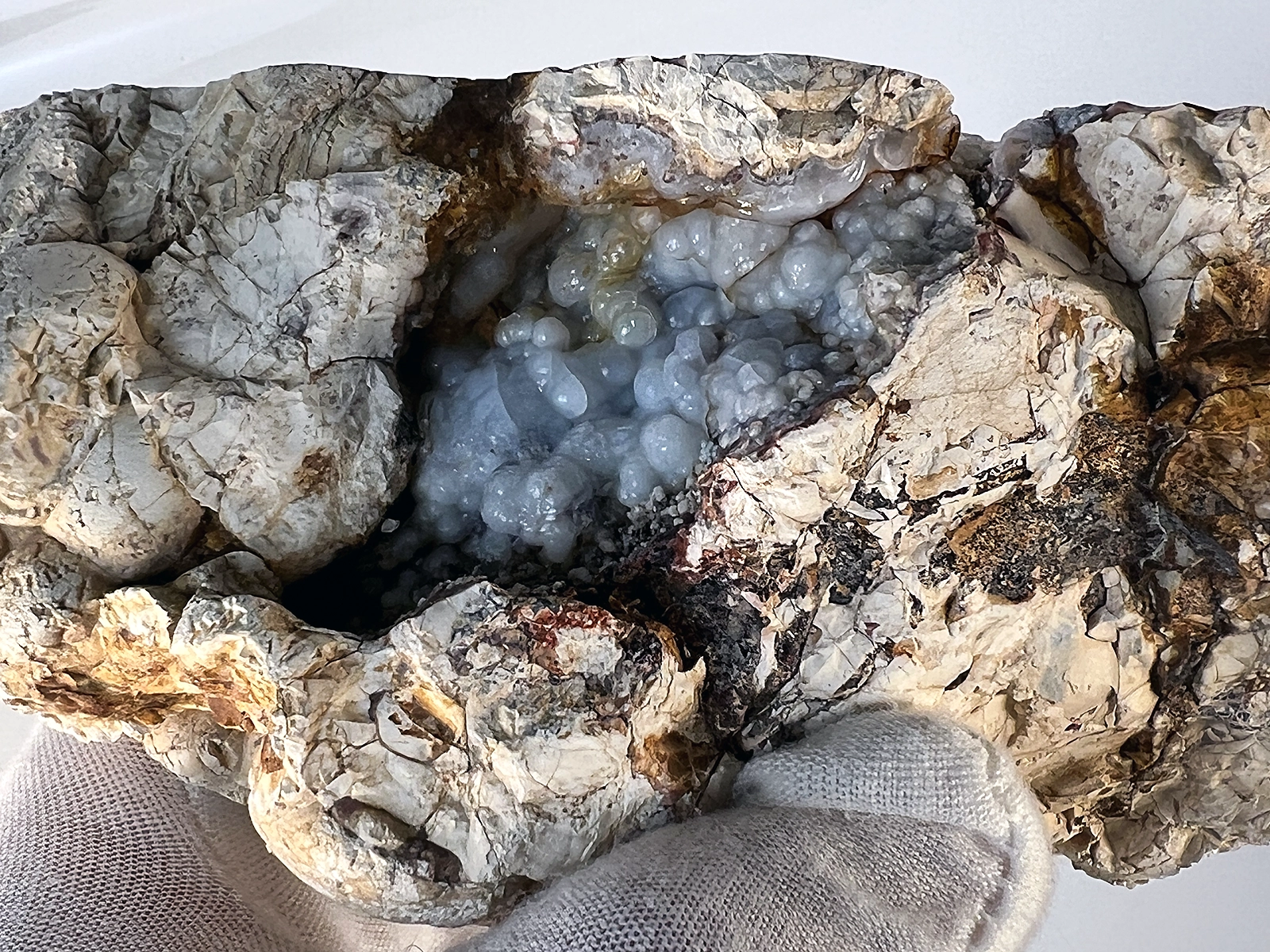
This particular specimen is especially effective as a pair because the two halves preserve the same branching internal structure from opposing faces, making it possible to see how the mineral-filled fractures originally passed through the nodule. And note the beautiful bubbly blue chalcedony on the exterior.
We acquire these directly from the finders as very rough nodules. They all look intriguing on the outside (a bit like the rock monster from Galaxy Quest, if you are a fan), but once they get to the lab for cutting, four out of five turn out to be duds with a dull, flat brown interior. Since 80% of our material gets discarded, the few good ones go on to our top lapidarist for preparation. And it is worth it. We consider Cold Mountain thunder eggs (when you actually get a good one) to be among the most beautiful of all.